
Biofloc Fish
Farming
ARK AQUATECH engineers India's most productive biofloc fish farming systems — complete biofloc tank design, aeration networks, oxygen management, water quality monitoring, and hands-on farmer training. Whether you are starting your first biofloc pond setup or scaling an existing operation, we deliver turnkey solutions backed by 12+ years of bio floc technology expertise.
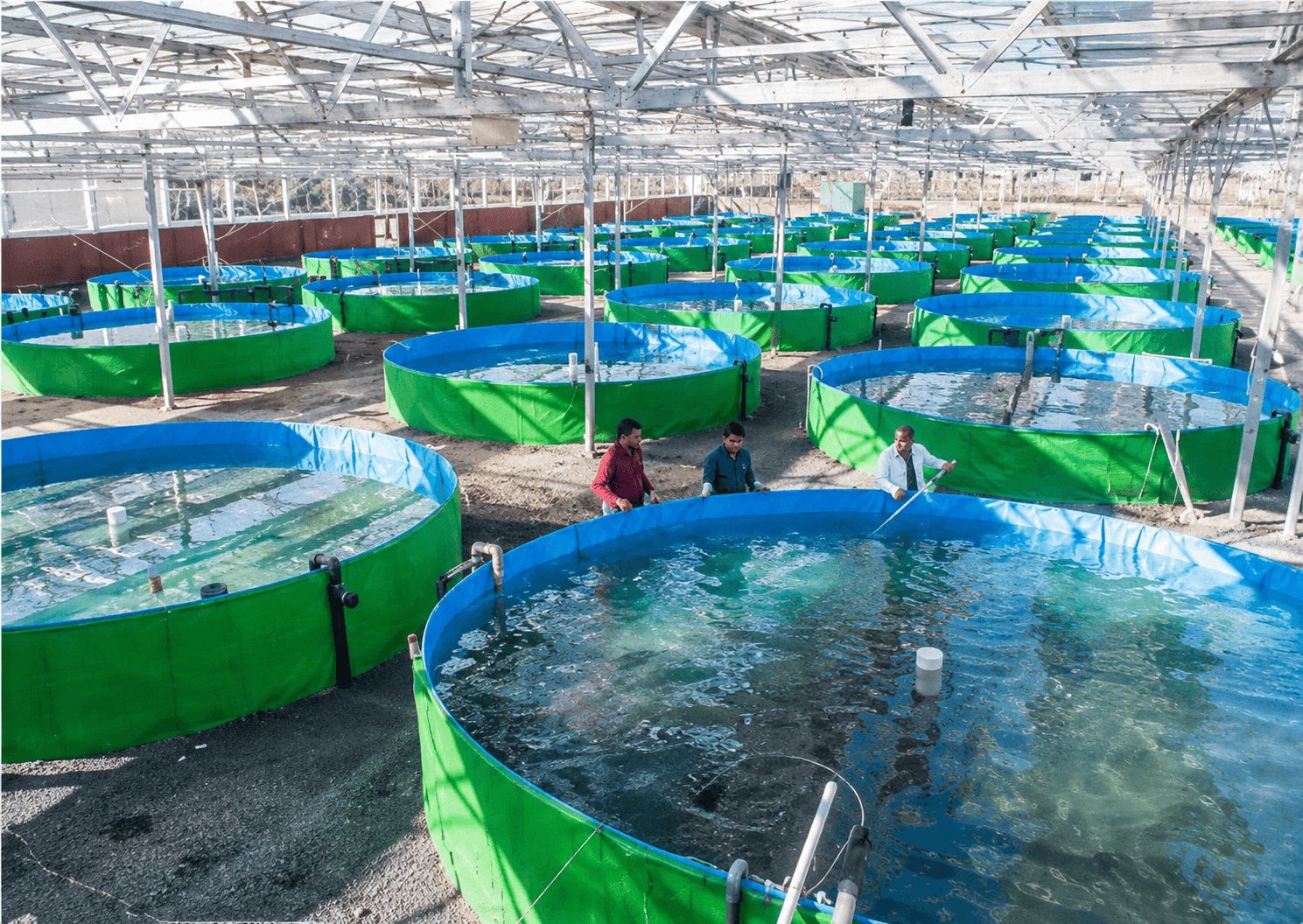
3–4×
Yield vs Traditional Pond
80%
Less Water Consumption
25%
Lower Feed Costs (FCR)
120
Days Per Harvest Cycle
What Is Bio Floc Technology & Why Is It Transforming Fish Farming in India?
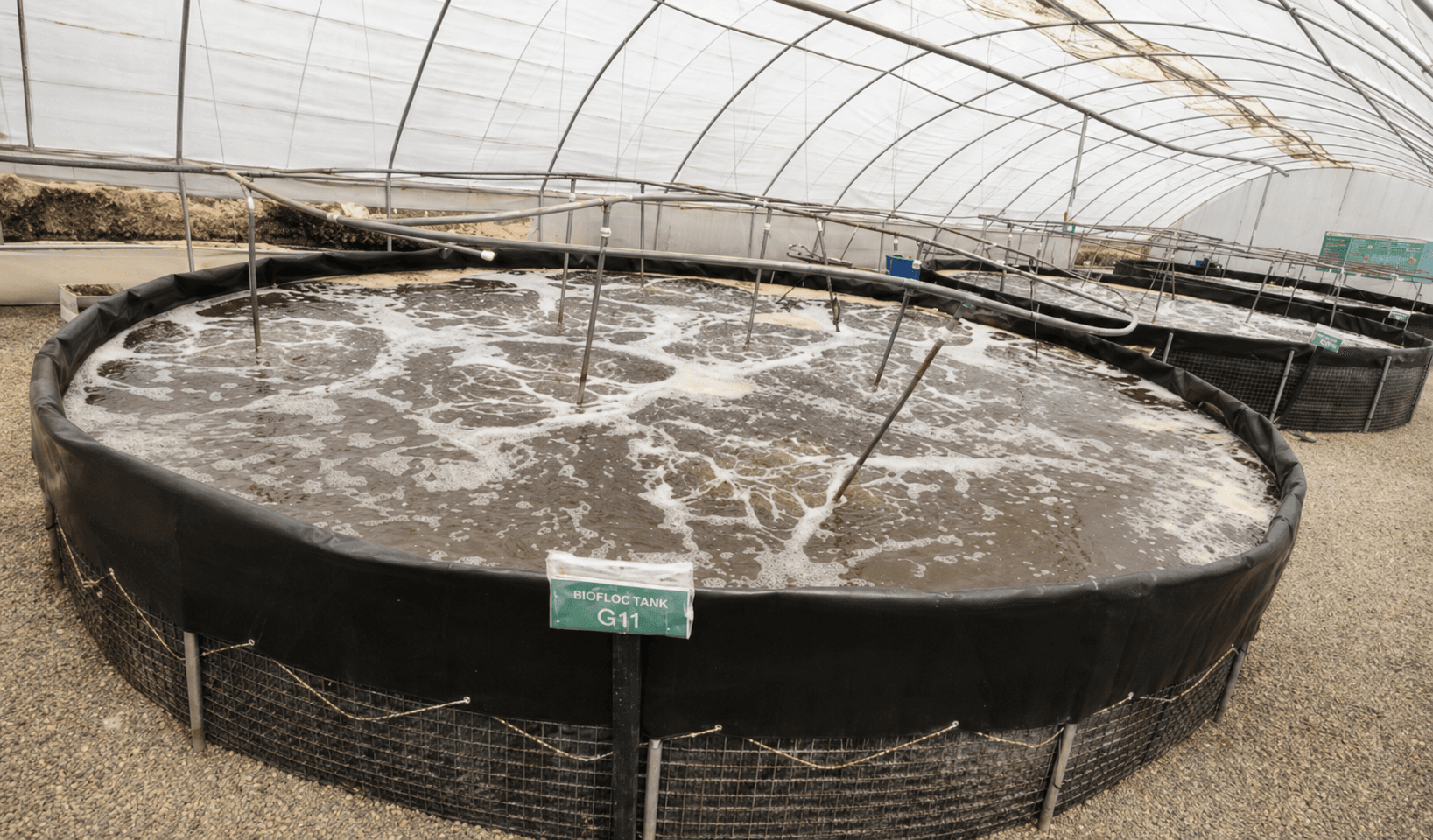
Bio floc technology (BFT) is a next-generation aquaculture method that harnesses beneficial microorganisms — heterotrophic bacteria, microalgae, cyanobacteria, and protozoa — to simultaneously treat water and produce natural feed inside the biofloc fish tank. Unlike traditional pond farming that releases nitrogen waste into surrounding water bodies, a biofloc system converts every gram of ammonia into bacterial biomass that fish consume as high-protein feed. The system essentially pays for its own water treatment while reducing feed bills.
For Indian fish farmers, biofloc fish farming addresses three of the biggest challenges in the sector simultaneously: land scarcity, water availability, and high feed costs. A single 10,000-litre biofloc fish tank produces 500–800 kg of tilapia per 120-day cycle on just 15–20 square metres of land. Running the same system on 500 square metres produces 25–40 MT annually — figures that were previously achievable only on 5–10 acres of traditional pond area.
ARK AQUATECH has pioneered bio floc farming implementations across Andhra Pradesh, Telangana, Tamil Nadu, Odisha, West Bengal, and 30+ other Indian states. Our engineering team designs each biofloc pond setup around site-specific conditions — water source, climate, species, market proximity, and farmer experience level — to ensure every client achieves consistent, profitable results from their very first harvest cycle.
How Biofloc Fish Farming Works
A step-by-step look at the science behind bio floc technology and how ARK AQUATECH engineers it into a reliable, scalable production system.
Step 01
Microbial Floc Formation
Beneficial bacteria, microalgae, and protozoa are cultivated inside the biofloc fish tank by maintaining a high carbon-to-nitrogen (C:N) ratio — typically 15:1 or above. These microorganisms form visible floc aggregates (10–15 mL/L TSS) that serve simultaneously as natural feed and a live biological filter.
Step 02
Ammonia Conversion & Water Treatment
As fish excrete ammonia, the microbial community in the biofloc tank converts it to bacterial biomass rather than allowing toxic build-up. This in-situ biological water treatment eliminates the need for large-volume water exchange — the biofloc system becomes its own water treatment plant.
Step 03
Natural In-Tank Feed Production
The floc biomass is protein-rich (25–40% crude protein) and continuously available to fish as a supplementary feed. This natural nutrition source reduces dependence on expensive commercial pellets, directly cutting biofloc fish farming cost by 20–30% compared to conventional methods.
Step 04
Harvest & Cycle Management
Tilapia, catfish, and shrimp grown in a biofloc fish tank typically reach market size in 90–150 days depending on species, stocking density, and temperature management. ARK AQUATECH provides complete cycle management protocols so each batch is optimised for maximum yield and consistent quality.
6 Key Advantages of Bio Floc Farming
Why thousands of Indian fish farmers are making the switch to biofloc fish farming systems.
3–4× Higher Yield
Biofloc fish farming consistently achieves stocking densities and harvest yields 3 to 4 times higher than traditional earthen pond aquaculture on the same footprint, directly improving revenue per square metre.
Minimal Water Use
Bio floc technology requires 80–95% less freshwater than flow-through pond systems because the microbial ecosystem treats water in-situ. Water is replaced only when evaporation or sludge removal necessitates it — critical in water-scarce regions of India.
Biosecure & Drug-Free
The dense microbial community in a mature biofloc system competitively excludes most pathogenic bacteria, dramatically reducing the risk of disease outbreaks and eliminating the need for antibiotics — a major market advantage for export-grade fish.
Year-Round Production
Unlike seasonal pond farming, biofloc fish tanks can operate year-round with temperature management systems. Farmers can run 3–4 full production cycles annually versus 1–2 cycles in open ponds, compounding annual revenue significantly.
Lower Feed Conversion Ratio
The in-tank floc biomass provides a continuous protein supplement, reducing feed conversion ratio (FCR) to 1.2–1.5 in optimised biofloc systems compared to 1.8–2.5 in conventional farms. Lower FCR directly means lower biofloc fish farming cost per kilogram produced.
Zero Effluent Discharge
A properly managed biofloc system discharges no harmful effluent — it is a closed or near-closed water system. This meets increasingly strict pollution control regulations and positions farms for international certifications like ASC and GlobalG.A.P.
Biofloc Fish Tank Types & Pricing
ARK AQUATECH supplies three main categories of biofloc fish tank to suit different budgets, scales, and operational contexts. Each option is engineered for optimal floc suspension, aeration efficiency, and ease of harvest — the three mechanical pillars of a productive biofloc system. Our team will recommend the right biofloc tank type based on your investment capacity, production target, and site conditions, with transparent biofloc tank price quotations.
HDPE Round Tanks
Food-grade high-density polyethylene tanks in 10,000 L – 1,00,000 L capacities. UV-stabilised, non-toxic, and engineered for optimal circular water flow that keeps flocs suspended uniformly. Most popular biofloc fish tank choice for small to medium commercial farms. Biofloc tank price starts from ₹45,000 for a 10,000-litre unit.
Tarpaulin Pond Tanks
Cost-effective oval or round tarpaulin-lined biofloc tanks suited for ground-level outdoor setups. Available in 50,000 L – 2,00,000 L configurations. Ideal for farmers transitioning from traditional earthen pond systems who want low-cost biofloc fish farming with minimal civil construction.
RCC / Concrete Biofloc Ponds
Permanent reinforced concrete biofloc ponds with HDPE or fibreglass lining for large-scale commercial operations. Longer lifespan (20+ years), lower long-term maintenance costs, and compatible with full smart automation and RAS integration. Suited for 5 MT/cycle and above production targets.
Which Biofloc Fish Species Does ARK AQUATECH Support?
Our biofloc fish farming systems are species-specific engineered. Stocking density, aeration rate, carbon source dosing, and harvest protocols differ significantly between tilapia, shrimp, catfish, and carp. The table below shows recommended parameters for each species in an ARK AQUATECH biofloc fish tank setup.
| Species | Stocking Density | Harvest Cycle |
|---|---|---|
| Tilapia (Nile & Hybrid) | 200–400 fish / 10,000 L | 100–120 days |
| Catfish (Pangasius) | 150–300 fish / 10,000 L | 120–150 days |
| Rohu & Catla | 100–200 fish / 10,000 L | 150–180 days |
| Shrimp (L. vannamei) | 300–500 PL / 10,000 L | 90–110 days |
| Common Carp | 150–250 fish / 10,000 L | 120–140 days |
| Barramundi (Seabass) | 80–150 fish / 10,000 L | 150–200 days |
Biofloc Fish Farming Cost Breakdown (India, 2024)
Transparency in biofloc fish farming cost is central to how ARK AQUATECH operates. The figures below represent indicative market prices for a standard biofloc pond setup in India. Actual costs vary by location, tank type, species, and scale. Contact us for a free detailed project report (DPR) with site-specific biofloc tank price and ROI projections.
| Cost Item | Indicative Range |
|---|---|
| Biofloc Fish Tank (10,000 L HDPE) | ₹45,000 – ₹75,000 |
| Aeration System (Blower + Diffusers) | ₹25,000 – ₹60,000 |
| Oxygen Management Unit | ₹15,000 – ₹40,000 |
| Water Quality Monitoring Kit | ₹10,000 – ₹35,000 |
| Feed & Probiotic (Per Cycle) | ₹30,000 – ₹80,000 |
| Fingerlings / PL Stock (Per Cycle) | ₹8,000 – ₹25,000 |
| Electricity (Per Cycle, 120 days) | ₹12,000 – ₹30,000 |
| Starter Biofloc System (5 Tanks) | ₹3.5 – ₹8 Lakh (All-in) |
ARK AQUATECH's Biofloc Fish Farming Support: From Setup to Harvest
Setting up a successful biofloc fish tank goes far beyond purchasing a container and filling it with water. The difference between a profitable biofloc farm and a failed one almost always comes down to the quality of initial system design, the precision of aeration sizing, and the consistency of water quality management during the first 30 days — what practitioners call the biofloc maturation phase. This is where ARK AQUATECH's engineering expertise and field experience become your greatest asset.
Our biofloc pond setup process begins with a detailed site assessment: water source analysis, soil bearing capacity (for ground-mounted tanks), power availability, ambient temperature range, and market access for the target species. This data shapes every subsequent design decision — tank size and count, aeration horsepower, supplemental heating or cooling, biosecurity infrastructure, and harvest logistics. We do not apply a one-size-fits-all template; every ARK AQUATECH bio floc farming project is custom-engineered for its specific context.
Aeration is the heartbeat of any biofloc system. The microbial community requires continuous oxygenation to remain aerobic and productive; fish require dissolved oxygen above 4–5 mg/L at all times; and the mechanical action of aeration keeps floc particles suspended rather than settling and putrefying at the tank bottom. ARK AQUATECH sizes aeration systems using computational fluid dynamics (CFD) modelling of tank geometry, ensuring uniform oxygen distribution even at peak biomass load. Our systems include primary blower banks, emergency backup blowers, automated changeover relays, and real-time dissolved oxygen monitoring with SMS alerts — so you are protected around the clock.
Water quality management in biofloc fish farming is a dynamic daily discipline. As fish biomass grows, ammonia production rises, floc volume increases, and CO₂ accumulates. Our water quality protocols — including daily floc volume measurement, alkalinity supplementation, selective sludge removal, and periodic partial water exchange — are documented in detailed farm management standard operating procedures (SOPs) that our team trains your operators to execute precisely. This systematic approach is what consistently delivers harvest yields at the top end of species potential rather than the average.
Post-harvest, ARK AQUATECH supports clients with market linkage advice, value-added processing options (live fish transport, chilled packing, dried and smoked products), and planning for the next production cycle. Our relationship with each farmer does not end at system commissioning — we are your long-term partner in building a profitable, sustainable biofloc fish farming enterprise.
Biofloc Fish Farming — FAQs
Answers to the most common questions about biofloc tank price, setup cost, species selection, and bio floc technology in India.
What is biofloc fish farming and how does it work?
Biofloc fish farming is a sustainable aquaculture method based on bio floc technology (BFT), where beneficial microorganisms — bacteria, microalgae, cyanobacteria, and protozoa — are cultivated inside the fish tank itself. These microbial flocs serve two purposes: (1) they biologically treat water by converting ammonia and nitrite into harmless compounds, and (2) they provide a protein-rich supplementary feed for the fish. The result is a high-productivity, low-water-exchange system that reduces feed costs and disease risk simultaneously.
What is the biofloc fish farming cost in India?
Biofloc fish farming cost in India varies based on tank size, species, and level of automation. A single 10,000-litre biofloc fish tank complete with aeration, monitoring, and stock costs approximately ₹80,000–₹1,50,000 to set up. A starter commercial unit of 5 tanks (50,000 L total) ranges from ₹3.5 to ₹8 lakh depending on tank type (HDPE, tarpaulin, or RCC) and automation level. ARK AQUATECH provides free detailed project reports (DPR) with full biofloc fish farming cost breakdowns on request.
What is the biofloc tank price from ARK AQUATECH?
Biofloc tank price at ARK AQUATECH starts from ₹45,000 for a 10,000-litre food-grade HDPE round tank inclusive of frame, outlet fittings, and central drain. Larger biofloc fish tanks (25,000 L – 1,00,000 L) are priced on request based on specifications. Tarpaulin-based biofloc tanks are available at lower prices for budget-conscious farmers. Contact our team for a current biofloc tank price list.
Which fish grows best in a biofloc system?
Nile tilapia and hybrid tilapia are the most popular biofloc fish due to their tolerance for high stocking density, wide temperature range, and rapid growth. Pacific white shrimp (Litopenaeus vannamei) is the dominant species in biofloc shrimp farming. Catfish (Pangasius), common carp, rohu, and catla also perform excellently in biofloc fish tanks. ARK AQUATECH designs each biofloc pond setup around the specific species, stocking density, and target market of each client.
How much land do I need for biofloc fish farming?
One of the greatest advantages of bio floc farming is its land efficiency. A starter biofloc setup with five 10,000-litre HDPE tanks can be installed in as little as 2,000–3,000 sq ft (including working area and infrastructure), producing 2–3 MT of fish annually. Traditional pond farming would require 1–2 acres for equivalent output. This makes biofloc fish farming viable for peri-urban areas, rooftop farms, and land-scarce farmers.
Do I need continuous electricity for a biofloc system?
Yes — aeration is critical in a biofloc fish tank because the microbial community and fish both require sustained dissolved oxygen above 4–5 mg/L. Most ARK AQUATECH biofloc systems are designed with primary blowers and backup aeration, connected to automatic generator changeover switches. Our smart automation platform sends alerts if oxygen levels drop, allowing immediate corrective action before any stock mortality occurs.
Explore Related Aquaculture Services
Start Your Biofloc Fish
Farming Journey Today
Get a free detailed project report, transparent biofloc tank price list, and site-specific biofloc fish farming cost estimate from India's most trusted bio floc technology company.