
Shrimp Farming
Setup
ARK AQUATECH engineers India's most productive shrimp farming setup solutions — HDPE-lined pond design, biofloc and RAS shrimp integration, aeration networks, water quality monitoring, and hands-on farmer training. Whether you are starting your first vannamei shrimp farming operation or scaling an existing pond, we deliver turnkey solutions backed by 12+ years of shrimp farming expertise.
3×
Yield vs Traditional Pond
90 Days
Typical Harvest Cycle
70%
Less Water Consumption
24/7
Water Quality Monitoring
What Does a Complete Shrimp Farming Setup Involve & Why Does It Matter?
A proper shrimp farming setup is far more than digging a pond and stocking post-larvae. It requires engineered pond design, HDPE lining to prevent seepage and pathogen harbouring, aeration sized for peak biomass load, and a disciplined water quality management protocol from day one. For vannamei shrimp farming, even small lapses in any of these areas can trigger disease outbreaks that wipe out an entire crop — which is why the quality of initial setup determines most of a farm's long-term profitability.
For Indian shrimp farmers, a well-engineered shrimp farming setup addresses the sector's biggest risks simultaneously: disease outbreaks, water availability, and inconsistent yields. Whether built as a traditional HDPE-lined pond, a biofloc shrimp tank, or a fully recirculating RAS shrimp system, the right setup can lift stocking density, cut water exchange requirements by up to 70%, and compress harvest cycles to as little as 90 days.
ARK AQUATECH has delivered shrimp farming setup projects across Andhra Pradesh, Odisha, West Bengal, Tamil Nadu, Gujarat, and other major Indian shrimp-producing states. Our engineering team designs each setup around site-specific conditions — soil type, water salinity, climate, target market, and farmer experience level — to ensure every client achieves consistent, biosecure, and profitable results from their very first crop.
How a Shrimp Farming Setup Works
A step-by-step look at what goes into a productive, biosecure shrimp farming operation engineered by ARK AQUATECH.
Step 01
Pond Design & Site Preparation
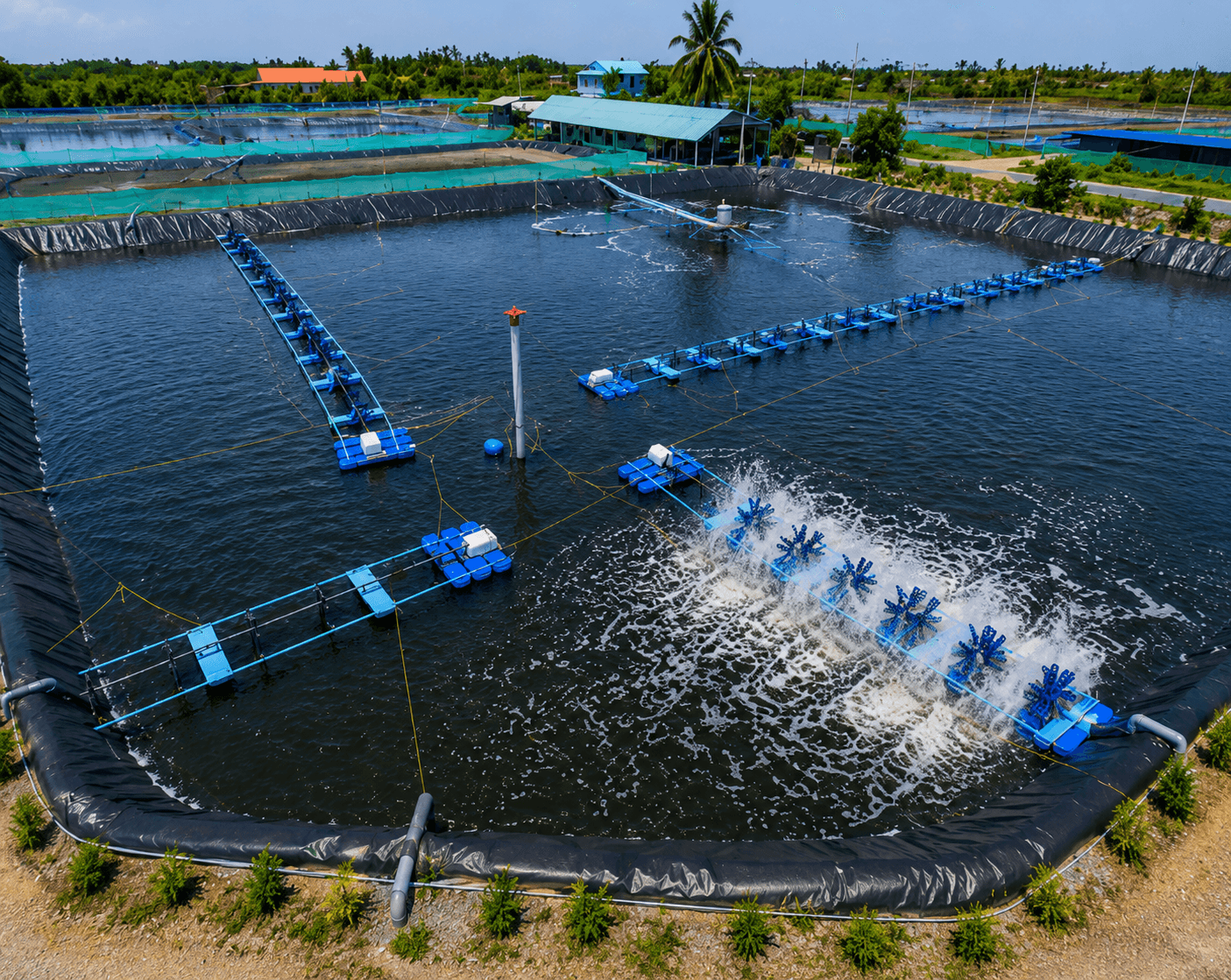
Shrimp farming setup begins with proper pond design — sizing, depth, slope, and drainage engineered specifically for L. vannamei culture. HDPE lining is installed to prevent seepage and provide a hygienic, easy-to-clean surface, forming the foundation of a productive shrimp pond.
Step 02
Water Preparation & Post-Larvae Stocking
Pond water is treated, fertilised to establish a healthy plankton bloom, and tested for salinity, pH, and alkalinity before post-larvae (PL) are introduced. Correct acclimatisation and stocking density at this stage are critical to survival rates in any shrimp farming setup.
Step 03
Aeration, Feeding & Water Quality Management
Paddlewheel aerators and diffused aeration systems maintain dissolved oxygen above 4–5 mg/L as biomass grows. Scheduled feeding, probiotic dosing, and daily water quality testing keep ammonia, nitrite, and pH within safe ranges throughout the grow-out period.
Step 04
Harvest & Cycle Management
Vannamei shrimp typically reach market size (30–40 count) in 90–110 days under well-managed conditions. ARK AQUATECH provides complete harvest planning, from partial harvesting strategies to full pond drain-harvest, ensuring maximum yield and quality at every shrimp farming setup we deliver.
6 Key Advantages of a Professional Shrimp Farming Setup
Why serious Indian shrimp farmers invest in a properly engineered shrimp farming setup.
3× Higher Yield Potential
A properly engineered shrimp farming setup using biofloc or RAS technology achieves stocking densities and harvest yields up to 3 times higher than traditional earthen pond farming on the same footprint, significantly improving revenue per acre.
Reduced Water Dependency
HDPE-lined ponds and biofloc/RAS shrimp systems reduce water exchange requirements by up to 70% compared to open earthen ponds, making shrimp farming setup viable even in regions with limited freshwater or brackish water access.
Disease Risk Reduction
Proper pond lining, biosecurity protocols, and water quality management dramatically lower the risk of white spot syndrome virus (WSSV), EMS, and other shrimp diseases that have historically devastated Indian shrimp farms — protecting both crop and investment.
Faster Harvest Cycles
Vannamei shrimp in a well-managed setup reach market size in as little as 90 days, allowing farmers to run 2–3 production cycles per year compared to a single cycle in poorly managed traditional ponds, compounding annual revenue significantly.
Export-Grade Quality Control
Consistent water quality, biosecure setup, and documented farm management practices help farmers meet the stringent quality and traceability standards required for export markets, unlocking premium pricing for certified shrimp farming operations.
Lower Feed Conversion Ratio
Optimised aeration, feeding schedules, and (where used) biofloc supplementation reduce feed conversion ratio (FCR) to 1.2–1.5 in well-managed shrimp farming setups compared to 1.8–2.2 in poorly managed traditional ponds, directly lowering cost per kilogram produced.
Shrimp Farming Setup Types & Pricing
ARK AQUATECH supplies three main categories of shrimp farming setup to suit different budgets, scales, and land availability. Each option is engineered for optimal aeration, biosecurity, and ease of harvest — the three mechanical pillars of a productive shrimp operation. Our team will recommend the right setup type based on your investment capacity, production target, and site conditions, with transparent shrimp farming setup cost quotations.
HDPE-Lined Earthen Ponds
Traditional grow-out ponds retrofitted or newly constructed with food-grade HDPE lining, sized from 0.5 to 2+ acres. Lining prevents soil erosion, seepage, and pathogen harbouring in pond soil — the most widely used shrimp farming setup for medium to large commercial operations. Setup cost starts from ₹8 lakh per acre.
Biofloc Shrimp Tanks
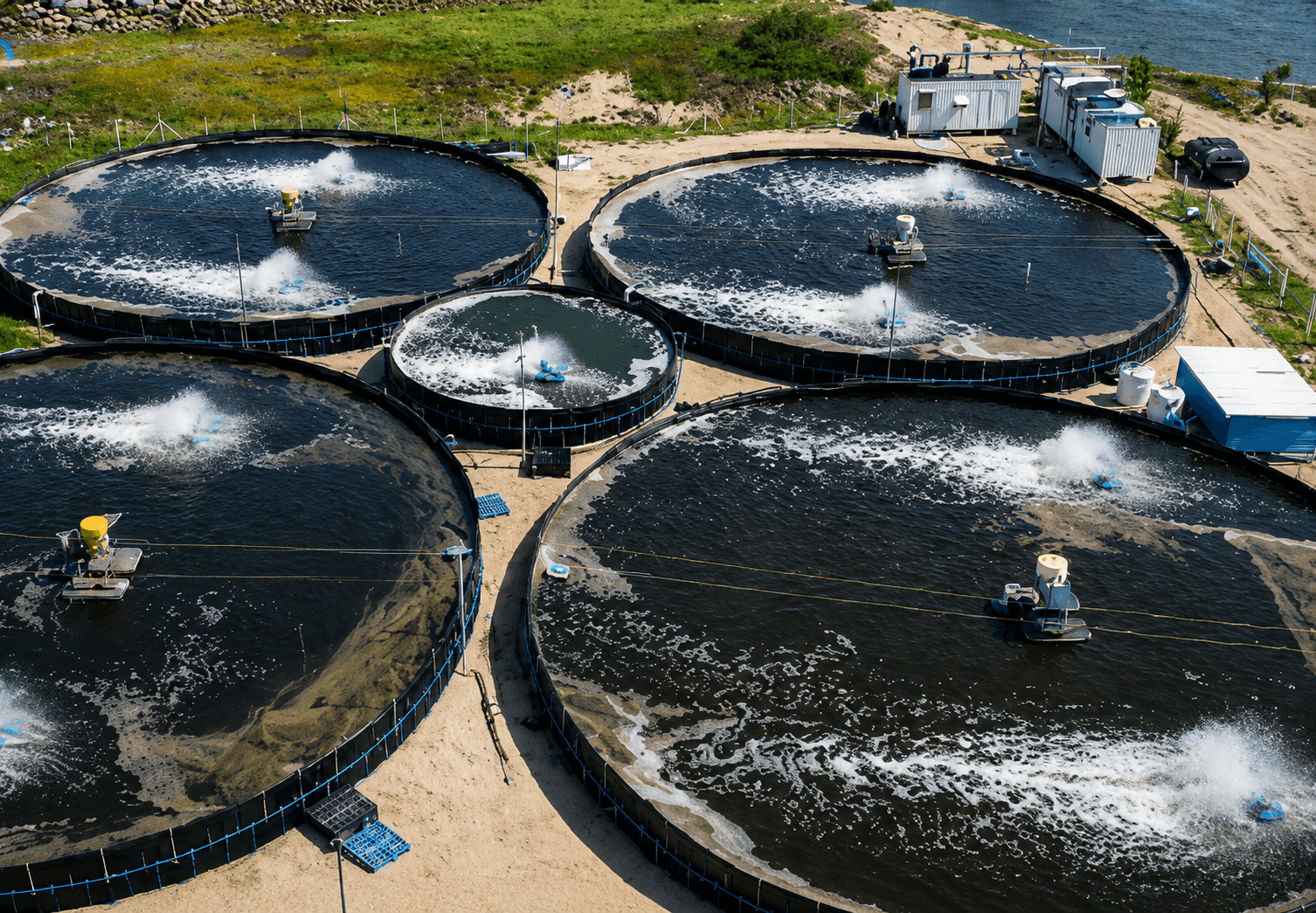
Round or oval HDPE tanks (10,000 L – 1,00,000 L) using biofloc technology to boost stocking density 2–3× beyond traditional ponds while cutting feed costs through in-tank microbial protein production. Ideal for land-scarce farmers seeking higher yield per square metre.
RAS-Integrated Shrimp Systems
Recirculating aquaculture systems engineered specifically for shrimp, offering the highest achievable stocking densities with precise water quality control and strong biosecurity. Suited for farmers targeting export-grade, disease-free shrimp production at commercial scale.
Which Shrimp Farming Setup Fits Your Operation?
Our shrimp farming setup designs are scale-specific engineered. Stocking density, aeration requirement, and harvest cycle differ significantly between traditional ponds, biofloc systems, and RAS-integrated tanks. The table below shows recommended parameters for each setup type from ARK AQUATECH.
| Setup Type | Stocking Density | Harvest Cycle |
|---|---|---|
| Traditional HDPE-Lined Pond | 60–100 PL/m² | 100–120 days |
| Biofloc Shrimp System | 150–300 PL/m² | 90–110 days |
| RAS-Integrated Shrimp Tank | 300–500 PL/m³ | 90–100 days |
| Semi-Intensive Earthen Pond | 20–40 PL/m² | 120–140 days |
| Super-Intensive Raceway | 500+ PL/m³ | 80–100 days |
| Nursery / Hatchery Tanks | Custom | 20–30 days |
Shrimp Farming Setup Cost Breakdown (India, 2024)
Transparency in shrimp farming setup cost is central to how ARK AQUATECH operates. The figures below represent indicative market prices for a standard 1-acre shrimp farming installation in India. Actual costs vary by location, setup type, and scale. Contact us for a free detailed project report (DPR) with site-specific cost and ROI projections.
| Cost Item | Indicative Range |
|---|---|
| HDPE Pond Lining (Per Acre) | ₹4,00,000 – ₹8,00,000 |
| Aeration System (Paddlewheel + Blower) | ₹1,50,000 – ₹4,00,000 |
| Post-Larvae (PL) Stock (Per Acre) | ₹40,000 – ₹90,000 |
| Feed (Per Cycle, Per Acre) | ₹2,00,000 – ₹5,00,000 |
| Water Quality Monitoring Kit | ₹15,000 – ₹40,000 |
| Probiotics & Pond Preparation | ₹30,000 – ₹70,000 |
| Electricity (Per Cycle, 100 days) | ₹50,000 – ₹1,20,000 |
| Starter Shrimp Farming Setup (1 Acre) | ₹8 – ₹18 Lakh (All-in) |
ARK AQUATECH's Shrimp Farming Support: From Pond Design to Harvest
Setting up a successful shrimp farming operation goes far beyond lining a pond and buying post-larvae. The difference between a profitable shrimp farm and a disease-hit failure almost always comes down to the quality of initial pond engineering, the precision of aeration sizing, and the consistency of water quality management during the first 30 days after stocking — the period most vulnerable to stress-related mortality and disease. This is where ARK AQUATECH's engineering expertise and field experience become your greatest asset.
Our shrimp farming setup process begins with a detailed site assessment: water source and salinity analysis, soil type and bearing capacity, power availability, and market access for the target size grade. This data shapes every subsequent design decision — pond size and lining, aeration horsepower, biosecurity infrastructure, and harvest logistics. We do not apply a one-size-fits-all template; every ARK AQUATECH shrimp farming project is custom-engineered for its specific context.
Aeration is the heartbeat of any intensive shrimp pond. Vannamei shrimp require dissolved oxygen above 4–5 mg/L at all times, especially during the final third of the grow-out cycle when biomass peaks. ARK AQUATECH sizes paddlewheel and diffused aeration systems based on projected peak biomass load, ensuring stable oxygen levels even during overnight low points. Our systems include primary aerators, emergency backup units, and automated changeover relays — so your crop is protected around the clock.
Water quality and biosecurity management in shrimp farming is a dynamic daily discipline. As shrimp biomass grows, ammonia production rises, alkalinity depletes, and disease risk increases. Our protocols — including daily water testing, probiotic dosing schedules, restricted farm access, and quarantine procedures for new stock — are documented in detailed farm management standard operating procedures (SOPs) that our team trains your operators to execute precisely. This systematic approach is what consistently delivers harvest yields at the top end of species potential rather than the industry average, which has historically been depressed by disease losses.
Post-harvest, ARK AQUATECH supports clients with market linkage advice, grading and sizing guidance, cold chain planning, and preparation for the next production cycle. Our relationship with each farmer does not end at pond commissioning — we are your long-term partner in building a profitable, biosecure shrimp farming enterprise.
Shrimp Farming Setup — FAQs
Answers to the most common questions about shrimp farming setup cost, pond design, species and stocking, and biosecurity in India.
What is involved in a shrimp farming setup?
A shrimp farming setup typically involves pond or tank construction with HDPE lining, an aeration system (paddlewheel or diffused aeration), water quality monitoring equipment, post-larvae (PL) stocking, and a feeding and management protocol. Depending on scale and goals, the setup may be a traditional HDPE-lined earthen pond, a biofloc shrimp tank, or a fully recirculating RAS shrimp system. ARK AQUATECH designs each setup around site conditions, water source, and the farmer's production targets.
What is the shrimp farming setup cost in India?
Shrimp farming setup cost in India varies significantly based on pond size, technology, and level of intensification. A traditional 1-acre HDPE-lined pond setup costs approximately ₹8–₹18 lakh including lining, aeration, stock, and first-cycle feed. Biofloc or RAS-based shrimp systems cost more per unit area but achieve higher density and yield. ARK AQUATECH provides free detailed project reports (DPR) with full shrimp farming setup cost breakdowns on request.
How much land is needed for a shrimp farming setup?
A traditional shrimp farming setup typically requires 0.5–2 acres per production pond for a commercially viable operation, though biofloc and RAS-based shrimp systems can achieve meaningful production in far less space due to their much higher stocking densities. ARK AQUATECH assesses each farmer's available land and recommends the setup type that maximises yield within that footprint.
How long does a shrimp farming cycle take?
Vannamei shrimp typically reach a marketable size of 30–40 count per kilogram in 90–110 days under a well-managed shrimp farming setup, though this can extend to 120–140 days in semi-intensive traditional ponds with slower growth conditions. Faster cycles in biofloc or RAS systems allow farmers to complete 2–3 production cycles annually.
How can I reduce disease risk in shrimp farming?
Disease risk in shrimp farming is best managed through proper pond lining (to prevent pathogen harbouring in soil), disease-free certified post-larvae, strict biosecurity protocols (footbaths, restricted farm access, quarantine of new stock), and consistent water quality monitoring. ARK AQUATECH designs every shrimp farming setup with biosecurity as a core principle, not an afterthought, to protect farmers from outbreaks like white spot syndrome virus (WSSV) and EMS.
Is biofloc or RAS better for shrimp farming than traditional ponds?
Biofloc and RAS-based shrimp farming setups achieve significantly higher stocking densities, better water quality control, and lower disease risk than traditional earthen ponds, but require a higher upfront investment and more technical management. Traditional HDPE-lined ponds remain a cost-effective entry point for many farmers. ARK AQUATECH helps clients choose the right approach based on budget, land availability, and long-term production goals.
Explore Related Aquaculture Services
Start Your Shrimp Farming
Setup Today
Get a free detailed project report, transparent shrimp farming setup cost breakdown, and site-specific pond design from India's most trusted vannamei shrimp farming company.