
Hatchery Design
Solutions
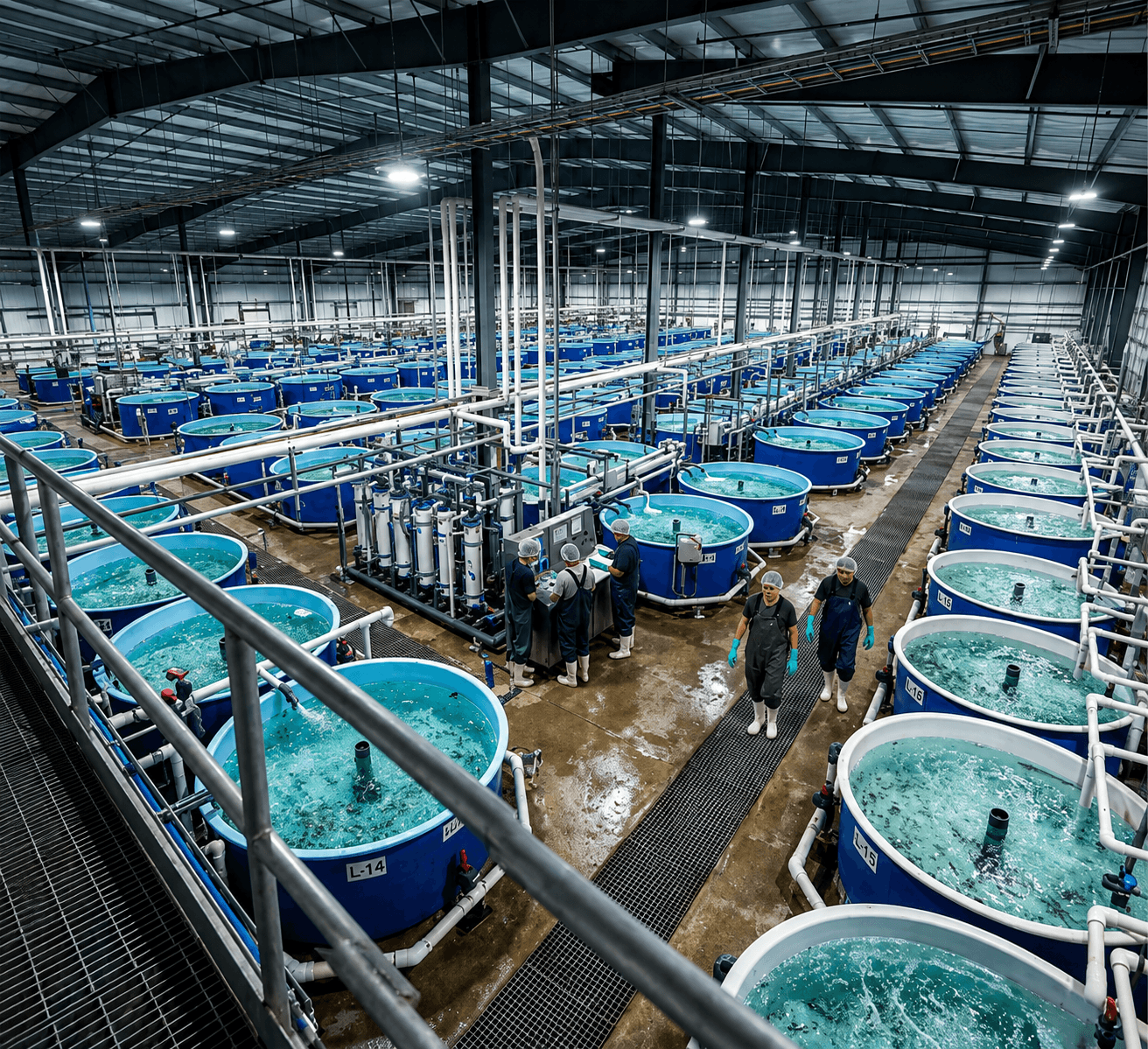
ARK AQUATECH designs and builds India's most advanced fish hatchery systems — from broodstock management and fish egg incubation to larval rearing units, hatchery water recirculation, biosecurity infrastructure, and smart automation. Whether you need a small freshwater fish hatchery setup or a large-scale marine shrimp hatchery design, our engineers deliver production-ready facilities on time and within budget.
200+
Hatcheries Commissioned
95%
Fingerling Survival Rate
12+
Species Supported
30+
States Served in India
Why Professional Fish Hatchery Design Determines Your Farm's Long-Term Success
The quality and consistency of fish seed — fingerlings, post-larvae, and fry — is the single most critical input in any aquaculture enterprise. Poorly designed fish hatcheries produce low-survival seed with high disease burdens and inconsistent genetic quality, undermining every downstream investment in grow-out infrastructure, feed, and labour. Professionally engineered hatchery design solutions from ARK AQUATECH give Indian fish farmers and aquaculture entrepreneurs the foundation for reliable, high-survival seed production that feeds profitable, scalable grow-out operations.
India's aquaculture sector faces a chronic shortage of quality fish seed, with demand for certified disease-free fingerlings and post-larvae far outstripping supply in most states. An efficiently designed fish hatchery setup is therefore not only a support infrastructure for your own farm — it is a standalone commercial opportunity, supplying premium seed to other growers in your region at strong margins. ARK AQUATECH has helped dozens of Indian entrepreneurs build profitable seed production businesses by designing hatcheries that combine biological excellence with operational efficiency and low running costs.
Our hatchery design approach is rooted in species biology, not generic templates. The reproductive requirements of Nile tilapia differ fundamentally from those of Pacific white shrimp, and the larval rearing protocols for marine barramundi are entirely different from those for Indian major carps. ARK AQUATECH's team of aquaculture engineers and fishery technologists brings species-specific expertise across freshwater, brackish water, and marine hatchery systems to every project we undertake across India.
Our Hatchery Design Process
From feasibility study to first harvest — how ARK AQUATECH delivers production-ready fish hatchery facilities.
Phase 01
Site Assessment & Feasibility
Every successful fish hatchery begins with a rigorous site assessment. ARK AQUATECH evaluates water source quality, flow rate, temperature stability, land topography, power availability, biosecurity risk, and proximity to grow-out farms. This data drives a feasibility report that determines optimal hatchery capacity, layout configuration, and species suitability before a single rupee is spent on infrastructure.
Phase 02
Hatchery Design & Engineering
Our engineers produce detailed hatchery design drawings covering broodstock holding areas, spawning systems, egg incubation hatching jars, larval rearing tanks, nursery grow-out raceways, live feed production units (Artemia, rotifer, algae), water treatment trains, and utility infrastructure. Every design is species-specific, biosecurity-compliant, and engineered for operational efficiency.
Phase 03
Construction & System Installation
ARK AQUATECH manages complete hatchery construction — civil works, tank fabrication (FRP, HDPE, concrete), plumbing, aeration networks, recirculating water systems, UV sterilisation, ozone dosing, temperature control, and electrical infrastructure. We coordinate all trades under a single project management framework to ensure on-time, on-budget delivery.
Phase 04
Commissioning, Training & Support
System commissioning includes full water quality validation, equipment calibration, biosecurity protocol testing, and a structured 5-day operator training programme. ARK AQUATECH provides a 12-month post-commissioning support contract covering remote diagnostics, quarterly site audits, consumables management, and emergency technical assistance.
Complete Hatchery Infrastructure Services
Every system your fish hatchery needs — engineered, supplied, and installed by one expert team.
Broodstock Management Systems
High-biosecurity broodstock holding tanks with individual species and sex segregation, controlled photoperiod lighting for induced spawning, hormone treatment protocols, and continuous water quality monitoring. Properly managed broodstock is the foundation of consistent, high-quality fish seed production — our systems maximise spawning frequency and egg viability.
Egg Incubation & Hatching Systems
McDonald-type and vertical flow hatching jars, tray incubators, and recirculating hatching systems engineered for optimal oxygen delivery, gentle water flow, and UV-disinfected water supply. ARK AQUATECH's fish egg incubation systems routinely achieve 85–95% hatch rates across tilapia, catfish, carp, shrimp, and marine species.
Larval Rearing Units
Conical or cylindro-conical fibre-reinforced plastic (FRP) larval rearing tanks with fine-bubble aeration, bottom drainage, and shading systems for light-sensitive larvae. Sized from 500 L to 20,000 L depending on production targets. Integrated with live feed dosing systems for Artemia nauplii, rotifers, and microalgae paste — the critical nutrition chain for early larval stages.
Hatchery Water Recirculation Systems
Closed-loop hatchery water recirculation systems (RAS) incorporating drum filters, biofilm reactors (MBBR or trickling filters), UV sterilisers, protein skimmers, degassers, and chiller/heater units. RAS hatcheries reduce water consumption by 90–98%, eliminate pathogen introduction risk from external water sources, and enable precise temperature control year-round — critical for out-of-season spawning induction.
Temperature Control & Conditioning
Species-specific temperature conditioning systems including industrial chillers, heat exchangers, immersion heaters, and insulated tank jackets. Precise thermal management is essential for controlling spawning cycles, accelerating larval development, and maintaining consistent survival rates. ARK AQUATECH designs and installs thermal systems capable of maintaining ±0.5°C stability across all hatchery zones.
Smart Hatchery Automation
IoT-based hatchery management systems with real-time dashboards monitoring dissolved oxygen, pH, temperature, salinity, turbidity, and ammonia across all tank zones. Automated feeding systems, photoperiod controllers, alarm networks, and remote access via mobile app reduce labour by 40% and eliminate the human error that causes the majority of larval mortality events.
Biosecurity & Pathogen Control
Hatchery biosecurity infrastructure including footbaths, air curtains, UV entry corridors, quarantine tank systems, effluent sterilisation, and strict water treatment protocols. ARK AQUATECH's hatchery designs follow NACA and FAO biosecurity guidelines to protect your broodstock investment and larval batches from viral, bacterial, and parasitic disease outbreaks.
Live Feed Production Units
Integrated live feed production systems for green water algae (Chlorella, Nannochloropsis), rotifer mass culture, Artemia hatching and enrichment, and copepod culture. Live feed quality directly determines larval survival and early growth rates in marine and freshwater hatcheries — ARK AQUATECH designs dedicated, biosecure live feed rooms within the hatchery footprint.
Fish & Shrimp Species We Design Hatcheries For
ARK AQUATECH's hatchery design expertise spans freshwater, brackish, and marine species. Each hatchery is engineered around the specific reproductive biology, larval nutrition requirements, and biosecurity profile of the target species — never a generic template applied across different organisms.
| Species | Water Type | Output Capacity |
|---|---|---|
| Nile & Hybrid Tilapia | Freshwater | 5–50 lakh fry/cycle |
| Rohu, Catla & Mrigal (IMC) | Freshwater | 10–100 lakh fry/cycle |
| Catfish (Pangasius/Clarias) | Freshwater | 5–30 lakh fry/cycle |
| Common & Grass Carp | Freshwater | 10–80 lakh fry/cycle |
| Shrimp (L. vannamei, Monodon) | Marine/BW | 50–500 lakh PL/cycle |
| Seabass (Barramundi) | Marine | 2–20 lakh larvae/cycle |
| Grouper & Snapper | Marine | 1–10 lakh larvae/cycle |
| Ornamental Fish | Freshwater | Custom |
Integrated Hatchery-to-Grow-Out Systems
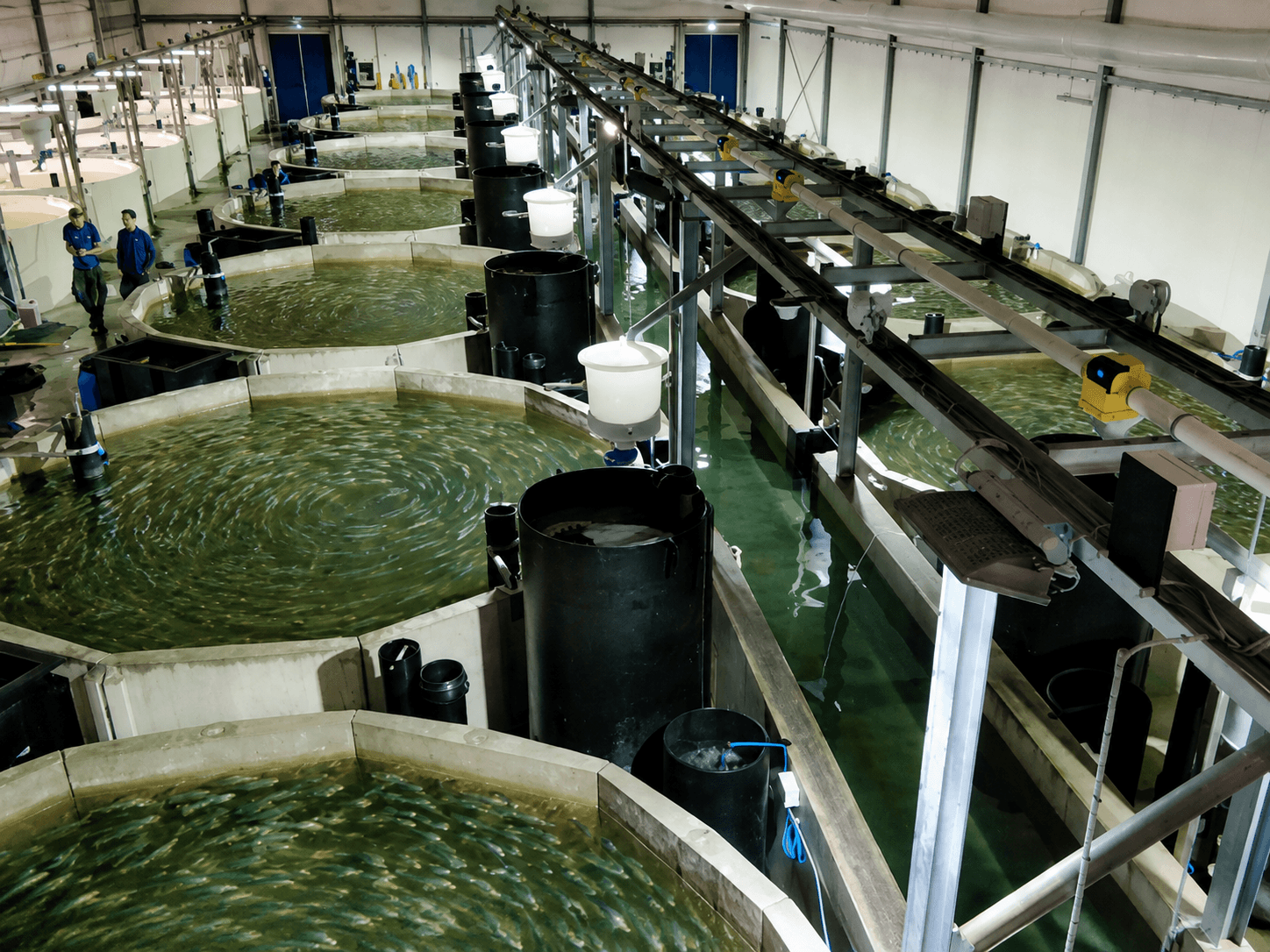
ARK AQUATECH specialises in designing hatcheries that connect directly to biofloc fish farming tanks, RAS grow-out systems, or earthen pond nurseries — creating a fully vertically integrated aquaculture enterprise. Controlling your own seed supply eliminates dependence on unreliable third-party hatcheries, cuts fingerling costs by 40–60%, and gives you complete genetic quality control over every batch you grow.
Explore Integrated SystemsWhat Makes ARK AQUATECH's Hatchery Design Different?
Most aquaculture infrastructure companies offer catalogue-based hatchery equipment packages that look identical regardless of species, geography, or production goal. ARK AQUATECH takes a fundamentally different approach: every fish hatchery design we produce begins with biology and works backwards to engineering. We ask what the organism needs at each life stage — water temperature, flow velocity, light intensity, dissolved oxygen, salinity, prey particle size during larval feeding — and then design the mechanical infrastructure to deliver those conditions with precision and reliability.
Hatchery water recirculation systems (RAS) are at the heart of every modern ARK AQUATECH hatchery design. In conventional flow-through hatcheries, water quality depends entirely on the incoming source — which fluctuates seasonally in temperature, pathogen load, and chemistry. During a disease outbreak in a nearby water body, a flow-through hatchery is defenceless. Our recirculating hatchery systems filter, sterilise, and recondition all water to precisely defined parameters before it contacts any broodstock, egg, or larva. The result is consistent survival rates across batches and seasons — the hallmark of a professionally managed aquaculture hatchery.
Biosecurity is the second pillar of ARK AQUATECH's hatchery infrastructure design philosophy. We apply zonal biosecurity principles — separating the hatchery into clean, grey, and dirty zones with appropriate physical and procedural barriers — to prevent cross-contamination between broodstock areas, larval zones, live feed production units, and staff movement paths. Pathogen introduction events that destroy entire hatchery batches are almost invariably the result of inadequate biosecurity design in the original facility. Investing in proper biosecurity infrastructure at the design stage is dramatically cheaper than recovering from a viral or bacterial outbreak post-commissioning.
Our smart hatchery automation systems transform how Indian hatchery operators work. Rather than relying on manual water testing several times daily — a labour-intensive and error-prone process — ARK AQUATECH installs continuous multi-parameter sensors in every tank zone, feeding real-time data to a centralised dashboard accessible on any smartphone. Automated alarms alert staff immediately when dissolved oxygen, temperature, pH, or salinity deviate from species-specific safe thresholds. This early warning system is the difference between a corrected parameter and a mass larval mortality event. Combined with automated feeding systems and photoperiod controllers, our automation platforms reduce skilled labour requirements by 35–45% while improving biological outcomes.
Government support for fish hatchery setup in India has strengthened significantly under the Pradhan Mantri Matsya Sampada Yojana (PMMSY) scheme. Eligible freshwater and brackish water hatcheries can access capital subsidies of 40% (general category) to 60% (SC/ST/women beneficiaries) on qualifying infrastructure costs. ARK AQUATECH assists every hatchery client in preparing bankable detailed project reports (DPR), subsidy applications, and all supporting documentation required for state fisheries department approvals — maximising the government funding available to reduce your capital investment and accelerate return on equity.
Hatchery Design FAQs
Common questions about fish hatchery setup cost, design process, species support, and government subsidies for hatchery infrastructure in India.
What does a complete fish hatchery design from ARK AQUATECH include?
A complete hatchery design from ARK AQUATECH covers the full lifecycle of fish seed production: broodstock holding and conditioning systems, spawning and egg collection infrastructure, incubation and hatching units, larval rearing tanks, nursery grow-out raceways, live feed production (algae, rotifer, Artemia), water treatment and recirculation systems, biosecurity infrastructure, and smart automation. We deliver architectural drawings, engineering specifications, equipment schedules, and operational SOPs — everything needed for construction and operation.
How much does a fish hatchery setup cost in India?
Fish hatchery setup cost in India varies significantly by species, production capacity, and technology level. A small freshwater hatchery for carp or tilapia (10–50 lakh fry/cycle) typically costs ₹20–60 lakh for civil and equipment infrastructure. A mid-scale shrimp hatchery (50–200 lakh PL/cycle) ranges from ₹80 lakh to ₹2.5 crore. Marine species hatcheries with RAS and temperature control are more capital-intensive, starting at ₹1.5–5 crore. ARK AQUATECH provides free detailed project reports (DPR) with itemised cost estimates. Government subsidies under PMMSY can cover 40–60% of eligible hatchery capital costs.
What is a hatchery water recirculation system and why is it important?
A hatchery water recirculation system (RAS) continuously filters, treats, and re-uses the same water in a closed loop — replacing only 2–10% daily through evaporation and sludge removal. This is critical in hatcheries because larval stages are extremely sensitive to water quality fluctuations and pathogen exposure. By eliminating reliance on raw intake water (which carries pathogens, fluctuating temperatures, and variable chemistry), RAS hatcheries achieve dramatically higher and more consistent larval survival rates compared to flow-through designs.
Which fish species does ARK AQUATECH design hatcheries for?
ARK AQUATECH designs hatcheries for a wide range of freshwater and marine species including Nile tilapia, hybrid tilapia, Indian major carps (rohu, catla, mrigal), catfish (Pangasius and Clarias), common and grass carp, Pacific white shrimp (L. vannamei), black tiger shrimp (P. monodon), seabass/barramundi, grouper, snapper, and ornamental fish. Each hatchery design is fully customised to the reproductive biology, larval requirements, and commercial production targets of the target species.
Can ARK AQUATECH integrate hatchery and grow-out farm operations?
Yes — integrated hatchery-to-harvest systems are one of ARK AQUATECH's core specialisations. We design hatchery infrastructure that connects seamlessly to nursery units and grow-out facilities (biofloc tanks, RAS, or pond systems), enabling a single enterprise to control the full production chain from broodstock to market. This vertical integration dramatically reduces fingerling procurement costs, ensures genetic quality control, and eliminates the biosecurity risks associated with purchasing seed from third-party suppliers.
What ongoing support does ARK AQUATECH provide after hatchery commissioning?
Post-commissioning support includes a 12-month technical support contract with quarterly site audits, remote water quality diagnostics, equipment maintenance scheduling, consumables (probiotics, disinfectants, biosecurity supplies) procurement support, and a dedicated helpline for emergency technical assistance. We also offer multi-year hatchery management advisory services for clients seeking ongoing optimisation of survival rates, spawning frequency, and production costs.
Explore Related Aquaculture Services
Ready to Design Your Fish Hatchery?
Get a free detailed project report, species-specific hatchery design drawings, cost estimate, and PMMSY subsidy eligibility assessment from India's most trusted aquaculture hatchery engineering team.